

Elk River, Minnesota, experiences a diverse climate characterized by warm, wet summers and cold, snowy winters. The average annual temperature ranges from 7°F to 82°F, with July being the warmest month and January the coldest. Precipitation is fairly evenly distributed throughout the year, with June typically being the wettest month.
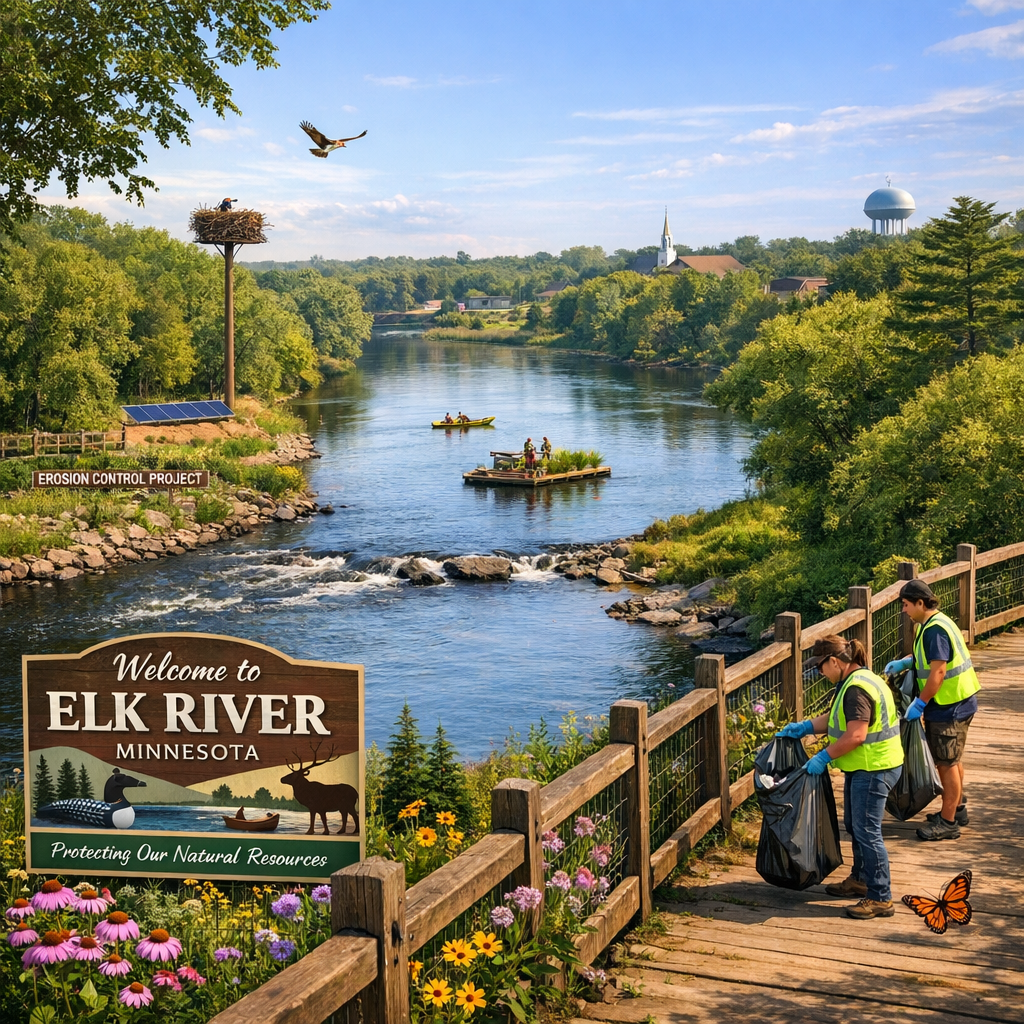
To safeguard its natural resources, Elk River has implemented several environmental initiatives. The city’s Environmental Department focuses on areas such as energy conservation, waste management, and water protection. A key component of these efforts is the management of stormwater through the Municipal Separate Storm Sewer System (MS4) permit, which aims to reduce pollutants entering local water bodies.
Additionally, Elk River has established a Gravel Mining Overlay District to regulate mining activities and minimize environmental impact. This includes annual licensing requirements and adherence to ordinances developed from environmental impact assessments.
Residents are encouraged to participate in these initiatives by reporting illicit discharges and staying informed about local environmental programs. By working together, the community can help preserve Elk River’s natural beauty and ensure a sustainable future.