

By William Smith
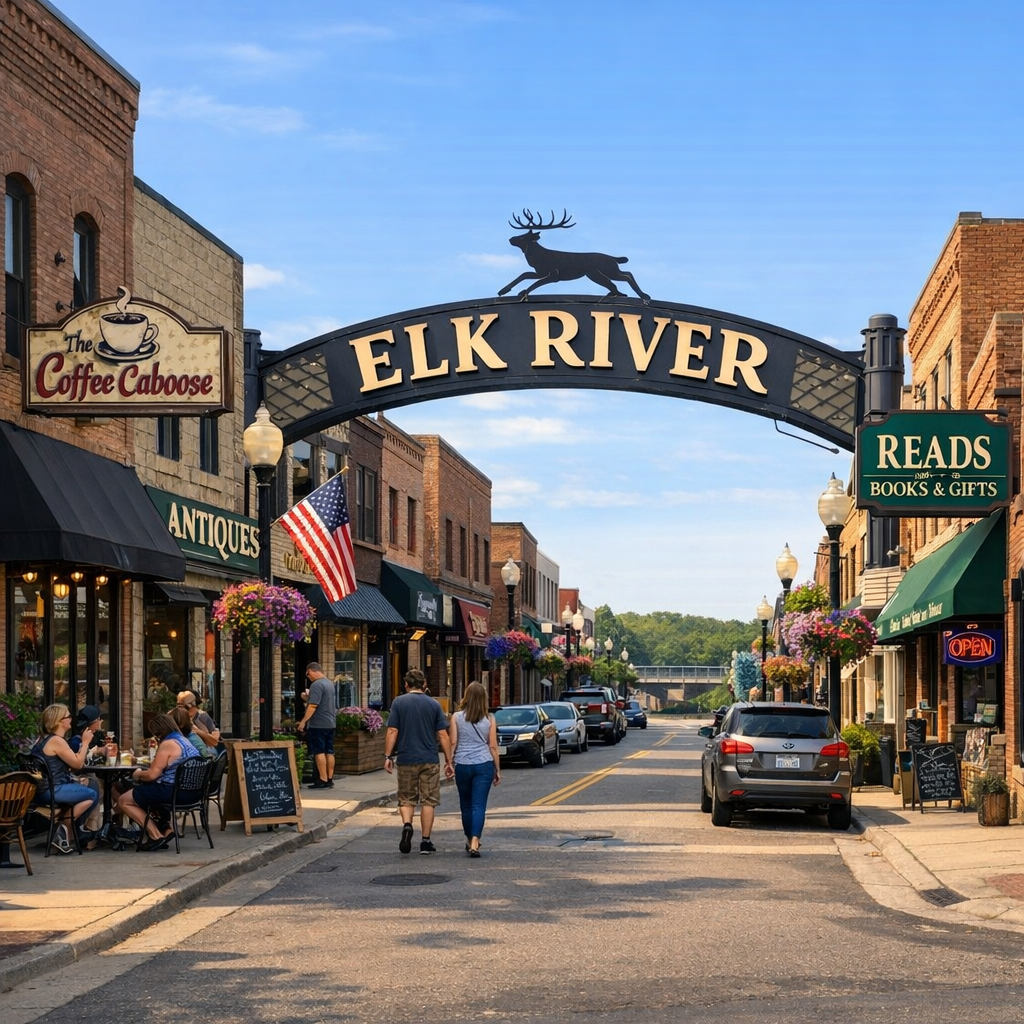
Elk River is experiencing changes that are reshaping how local businesses grow, where opportunities lie, and how residents engage with their economy. From commercial corridors seeing new activity to long-term plans aiming to balance growth with local character, there’s a lot underway in our city.
New Business Corridors Taking Shape
This year, phase one of the Downtown Improvement Project began, involving parking-lot upgrades and utility work behind downtown businesses. The Elk River Farmers Market was temporarily relocated to the YMCA parking lot on Business Center Drive as part of this work. What started as a workaround turned into a revealing shift: Business Center Drive has quietly begun functioning like a second hub for retail, dining, and evening activity, thanks in part to new businesses opening nearby. MC’s Pub, Les Schwab Tire Center, and planned conveniences along Highway 10 are all clustering in that west side corridor. These shifts suggest customers are already following where businesses are growing.
Workforce and Business Mix
Elk River has a workforce of more than 13,800 residents age 16 and over, with over 12,500 employed. Key sectors include retail, healthcare, manufacturing, and food service. Manufacturing stands out: though relatively few in number, manufacturers employ over 1,400 people and offer higher wages than average.
Education levels are also rising. Many residents hold high school diplomas or higher degrees, helping support more technical roles in manufacturing, health care and services. Commute times are moderate—averaging under 30 minutes. Notably, almost 2,000 people work from home, reflecting evolving work habits and possible demand for localized service and business models.
Supportive Infrastructure and Long-Range Planning
The City of Elk River has adopted several strategic policy tools, including its Economic Strategic Development Plan and a newly drafted Downtown Master Plan. These guide land use, promote mixed-use and commercial expansion in growth areas, and prioritize long-term economic goals.
Efforts include supporting affordable housing and childcare to curb labor shortages, updating infrastructure to handle increased demand, and fostering development along Highway 10 and Highway 169 corridors. There’s also recognition of underused sites—like the former GRE power plant on the riverfront—that may serve as business parks or mixed use in the future.
Takeaways for Local Businesses and Entrepreneurs
- Corridor matters: business location has significant impact, and new clusters along Business Center Drive may offer more exposure as they grow.
- Lean on local support: The Elk River Area Chamber of Commerce, Economic Development Authority, and city resources have data, programs, and partnerships aimed at helping startups or expansion.
- Adapt to changing needs: Mixed use, services within residential neighborhoods, and amenities for people working remotely are becoming more important.
- Watch policy and zoning: As land becomes rezoned and redevelopment opportunities emerge, those paying attention early may have the edge when acquiring property or negotiating arrangements.
All signs show that Elk River’s business environment is in motion—expanding and adapting to a growing, more mobile, more diverse community. For entrepreneurs and established businesses alike, change isn’t a hurdle—it’s a chance to align with new patterns, explore emerging locations, and build for a future that balances momentum with what makes Elk River feel like home.