

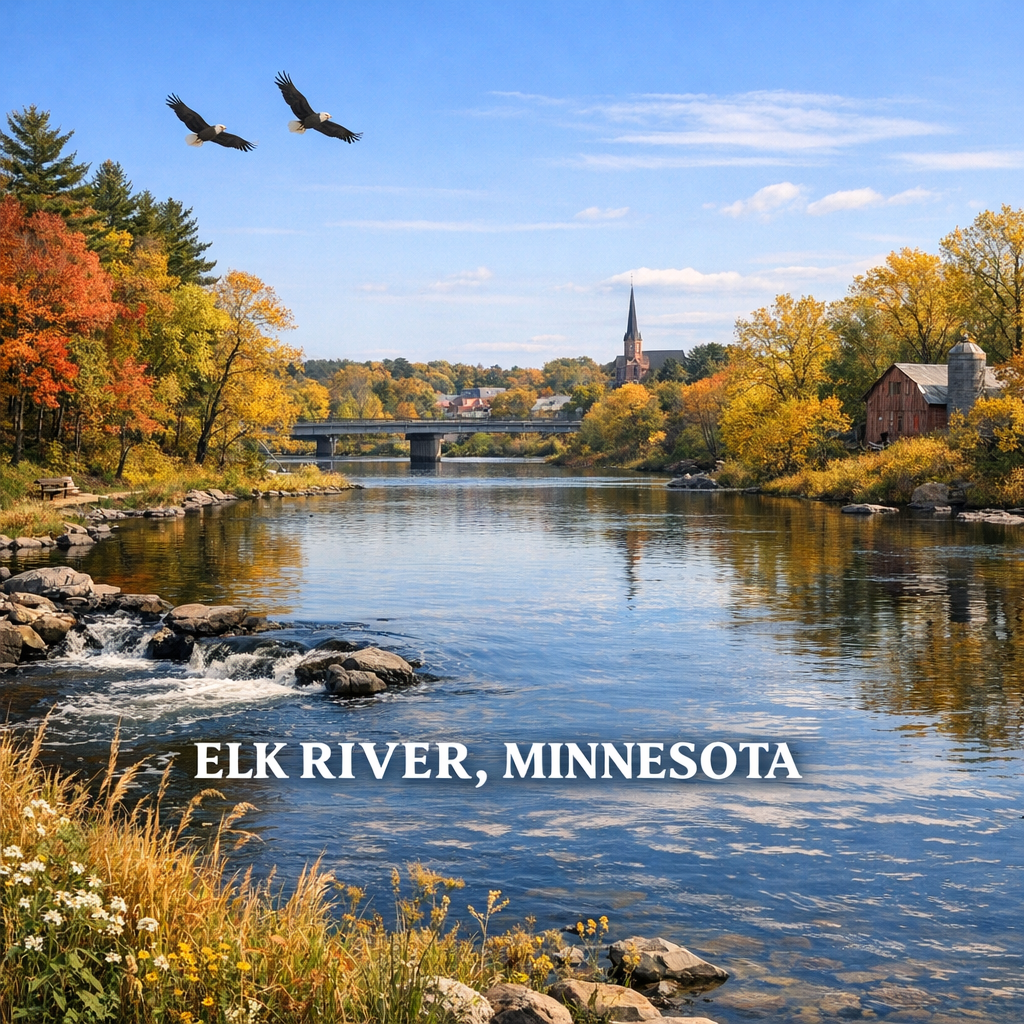
Elk River, Minnesota, experiences a humid continental climate characterized by distinct seasonal variations. Summers are warm and wet, while winters are cold and snowy. The average annual temperature is approximately 45°F (7.4°C), with annual precipitation around 34 inches (860 mm).
Seasonal Weather Patterns
In Elk River, the warm season lasts from late May to mid-September, with average daily high temperatures above 70°F (21°C). July is typically the warmest month, averaging a high of 82°F (28°C) and a low of 62°F (17°C). The cold season spans from late November to early March, with average daily high temperatures below 35°F (2°C). January is usually the coldest month, with an average low of 7°F (-14°C) and a high of 22°F (-6°C).
Environmental Initiatives
The City of Elk River is committed to maintaining and improving environmental quality for the health and safety of its residents. The Environmental Department oversees various programs, including energy conservation, waste management, and water protection. Notably, the city manages a Municipal Separate Storm Sewer System (MS4) to control stormwater runoff, ensuring that pollutants do not contaminate local water bodies. Additionally, Elk River has established a Gravel Mining Overlay District to regulate mining activities, balancing economic interests with environmental preservation.
Community Involvement
Residents are encouraged to participate in environmental stewardship through programs like garbage and recycling services, tree planting initiatives, and invasive species management. By staying informed and engaged, the community plays a vital role in sustaining Elk River’s natural beauty and ecological health.